Looking back to the beginning of the semester I was not quite sure what to expect. I remember being so confused on grasping certain concepts and that was clear to see in some of my journal entries. One in which I wrote that “I have no idea what to do.” This was before beginning the profile assignment we had at the beginning of the semester. It wasn’t until I read some examples on The Activist before I even decided what a profile actually is. This was before I knew what genre was too, so I just had an idea of what a profile should “require.” It was my first introduction to a type of genre.
My perception of what makes a profile to be a profile was solely based on the examples I had seen. Some points include that it is an article written on someone or an organization. Either a question and answer format or a few paragraphs with direct quotes of these people. Typically, either something about their life or what the company does and how it affects a community. I went through a lot of changes, I began with a full question and answer paper but then realized that it was very lengthy and didn’t get much attention from readers in the beginning. So I switched it up. I cut out almost half of my words and used direct quotes from The Coalition in which I chose. I wrote about key points and how they benefit our community here in Cincinnati. I also began with some facts that weren’t too appealing to see as a resident of the greater Cincinnati area about homelessness. Even after writing this profile, I was unaware then about this genre and what I should make of it. Something that I strongly connected this profile to was the concept of discourse communities.
According to The CCCC’s article “Discourse Communities”, this is how it is described, “it’s a group of people, members of a community, who share a common interest.” In this case I can definitely agree. We see this concept constantly whether it’s at a workplace, in our families or here at UC Blue Ash. I see it as everyone within a group as sharing the same goals, collaborating together for a similar outcome. The article mentions that these people have the “same language.” I would consider this to be incorrect, in my theory of discourse communities I think diversity is a part of what makes it important. Same thoughts and interests don’t have to be the same language. I see it as our casual classroom where we as students work together to achieve the same goals. Doesn’t necessarily have to be a long term goal like graduation but as simple as completing and assignment. Discourse communities relate to me personally by my major of choice. Being in radiology there are standards in which everyone in that workplace will have. We all have goals of keeping a patient healthy, getting the scans we need by MRI or XRay. Overall, we are all working to get an end goal to benefit and help the patient. That’s the smaller picture, you can go even larger and think about how a hospital as a whole is a discourse community. Everyone in there is working for the patient’s benefit. Whether it’s social work, billing, nursing or surgeon.
Moving into our photo caption assignment, I felt more confident about what regulations were to classify this as this type of genre. These are something I’ve seen before and that I felt I could write about anything that I enjoy. I would classify an article to be a photo caption if it contained many pictures with a small paragraph or less. These vary in the way that they are written, some in order by a ranking or casually scattered.
So after these assignments the question came up. What is genre? Lisa Bickmore described it well in Genre in the Wild as “So a genre is an act of language—for our purposes here, mostly acts of writing, in particular—that behaves in typical or characteristic ways, which we can observe in repeated or persistent situations.” We see these often and not always in writing. I thought about it in my workplace. My job is so consistent that I do the same thing repeatedly. A customer walks in and sits down, I greet them with “how are you today? My name is Abby. I’ll be taking care of you today..” Actually is so normalized that we actually do call this a 2 minute greeting. It seems that there are more opportunities when written though. Like invitations, maybe a twitter post or even a daily newspaper. Now within that broadened term of genre, there are classifications. In which we called photo caption, profiling, and many others. These are the ones that have these characteristics that you would be able to recognize as a certain genre. A lot of genres have different tones used that make them vary slightly.
Before I was asked to write about what puzzles me about this course. In my midterm reflection I had written that “Perhaps, I just feel as if I don’t know if there is a correct answer or not.” Well at the time I didn’t understand why there weren’t really regulations to what our assignments were. Other than the typified utterance that reoccurs called genre according to Lisa Bickmore and what characteristics we thought they needed. Our assignments were very broad because we were encouraged to explore. By explore I mean figure out we think these genres should include and look like. It is about our perception, so really is there a wrong answer? No, because genre varies in so many different ways. To the point if someone wrote an article and its characteristics were slightly off from normal people either wouldn’t question it or it may become a new “trend” that is recognized. Lisa describes this as “genres evolve and change over time, and each user taking up a genre takes it up just a little bit differently” Since everyone takes it up a little differently, the chances of genre evolving and adding new recognizable traits will occur.
Vivian Giang wrote that, “Other factors, like culture, meaning the traditions and habits we pick up from those around us, also shape the way we talk, the things we talk about, and hence, changes the way we think or even how we remember things.” Is genre almost like a habit? Or a trend where people see it and follow it? The way we change these genres changes our perception and Vivian described it well. Similar to how we name things with words. They were just made up and then people used them recurrently. Actually, the article No One Could See the Colour Blue Until Modern Times by Kevin Loria says people didn’t even notice the color blue until it was named. Again with someone’s perception changing a genre.
In a huffpost Morty Lekoe says “In order for any given thing to exist, there must also be something other than that thing.Consider this for a moment. Can you see that any physical object is bounded by “not that object”? If an object did not have any borders — that is, if it wasn’t surrounded by “not that object” — it couldn’t be distinguished from everything else. In other words, it wouldn’t exist.” If something cannot be distinguished from things around it, it doesn’t really exist. Relating this back to genre, it’s about our perception and what we regularly see.
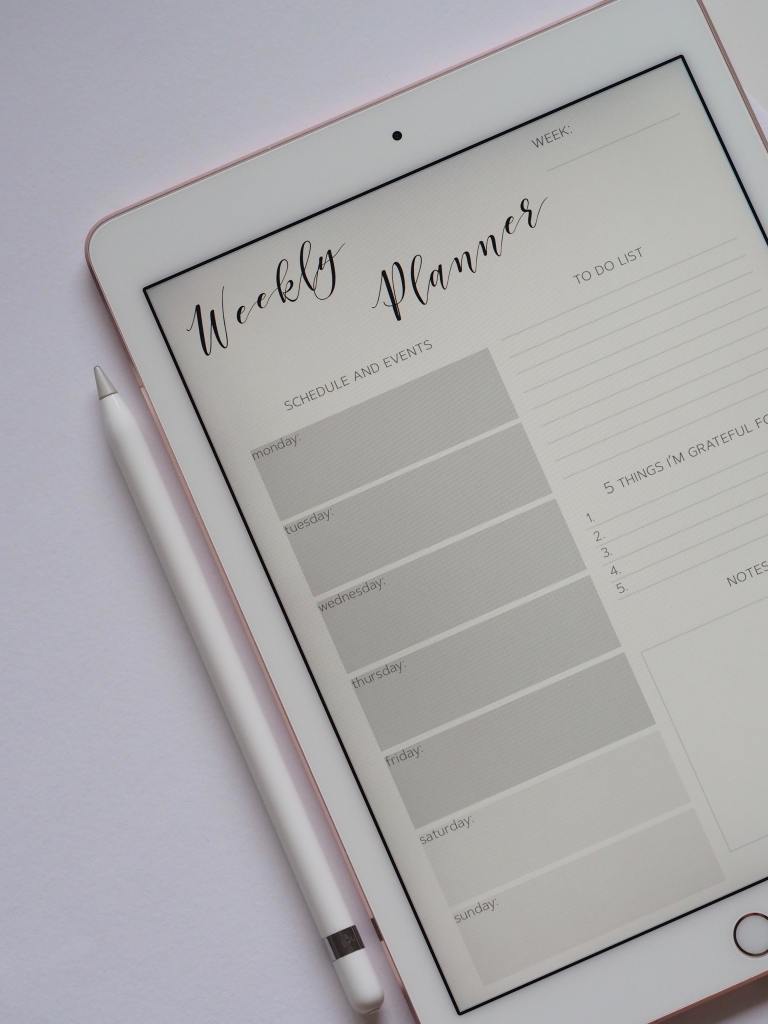
Now that we have moved to distance learning I am still enjoying reading about perception and genre. It seems complex to think about but it’s something to do while at home. Learning online hasn’t been easy. My science classes have been a pain and some professors think they are helping us by giving more assigned work. I am excited to get back to work but also I am not panicked anymore. Without feeling anxious about Covid, I have had so much time to spend time with my family which I don’t get to do often. It’s been nice to be home, I guess my only concern is money so I did recently get a job as an STNA. I am someone that needs a daily schedule to function. I am unable to sit inside all day, I have to do something for motivation. For The Activist, I wrote something short on how to pass online classes. I included keeping this schedule and planning out your days. I enjoyed writing this short article because I know it’s something all of us are struggling with right now during distance learning. However I can’t decide what genre it could fall under. I did include pictures so I leaned towards photo captions. However my paragraphs were not directly focused on what those pictures were. Earlier I mentioned how hospitals were an example of a discourse community. During Covid-19, these workers are doing everything they can to help their patients including risking getting the virus. I read a post about doctors sleeping in the hospitals for nurses sleeping in their garages to prevent spreading it to their families. Again, they are
working for the same outcome, to keep everyone safe and healthy.
Sources
Lefkoe, Morty. “Huffpost Is Now A Part Of Verizon Media”. Huffpost.Com, 2020, https://www.huffpost.com/entry/how-our-perceptions-shape_b_839089.
Loria, Kevin. “No One Could See The Colour Blue Until Modern Times”. Business Insider Australia, 2015, https://www.businessinsider.com.au/what-is-blue-and-how-do-we-see-color-2015-2.
Secure.Ncte.Org, https://secure.ncte.org/library/NCTEFiles/Resources/Journals/CCC/0641-sep2012/CCC0641PosterDiscourse.pdf.
Giang, Vivian. “How Language Shapes Our Perception Of Reality”. Pocket, https://getpocket.com/explore/item/how-language-shapes-our-perception-of-reality?utm_source=pocket-newtab.
Bickmore, Lisa. “GENRE In The WILD: Understanding Genre Within Rhetorical (Eco)Systems”. Openenglishatslcc.Pressbooks.Com, https://openenglishatslcc.pressbooks.com/chapter/genre-in-the-wild-understanding-genre-within-rhetorical-ecosystems/.


 Writing